

From antiquity to the red carpet: a deep dive into the history of jewelry
The history of jewelry spans thousands of years, reflecting changing ideas of power, beauty, identity and social status. From ancient ornaments to Renaissance jewels and the emergence of modern luxury jewelry houses, jewelry has continuously evolved alongside art, craftsmanship and society.
The chronological timeline of jewelry as wearable art
Long before the emergence of today's luxury jewelry brands, ornaments were used to communicate identity, rank, belief and wealth.
| Historical era | Core materials used | Sociological purpose and meaning |
|---|---|---|
| Ancient Antiquity | Gold, silver, bronze, precious and semi-precious stones, shells | Jewelry expressed status, power, religious belief and protection. Certain pieces also accompanied funerary and ceremonial practices. |
| The Renaissance | Gold, pearls, diamonds, rubies, emeralds, enamel | Jewelry became closely linked to European courts, wealth and political influence while benefiting from advances in craftsmanship and gemstone cutting. |
| The Belle Époque | Platinum, diamonds, pearls and coloured gemstones | Technical progress enabled lighter, more delicate creations. Jewelry reflected the elegance of a wealthy international elite and the artistic dynamism of the period. |
Across these eras, jewelry gradually evolved from symbolic ornament into an increasingly sophisticated form of wearable art.
The nineteenth-century genesis: the evolution of luxury jewelry brands
The nineteenth century played a decisive role in shaping the modern jewelry industry.
Industrialisation, the growth of an affluent bourgeoisie, international exhibitions and new retail practices progressively transformed the relationship between jewelers and their clients.
A shift from royal court patronage to the modern retail showroom
For centuries, leading jewelers depended heavily on royal and aristocratic patronage. During the nineteenth century, this model expanded as major houses began developing permanent boutiques and cultivating an international private clientele.
Paris became one of the principal centres of this transformation. Rue de la Paix and, later, Place Vendôme became closely associated with the emerging codes of modern high jewelry.
The boutique itself became part of the luxury experience: a place not simply to purchase precious objects, but to enter the universe of a Maison.
Pioneering foundations of legendary luxury jewelry houses
Several houses helped establish the foundations of the modern industry.
Mellerio traces its history back several centuries and describes itself as the world's oldest family-run jewelry house. The family established itself in France and developed close relationships with European courts before opening on rue de la Paix in 1815.
Torrini, with its Florentine heritage, represents another long-standing European jewelry tradition rooted in goldsmithing and craftsmanship.
Across the Atlantic, Tiffany & Co. helped establish a distinctly American vision of luxury jewelry, while in Paris Boucheron became one of the great names of French high jewelry, combining technical innovation with a recognisable creative identity.
Together, houses such as Mellerio, Torrini, Tiffany & Co. and Boucheron contributed to many of the codes still associated with high jewelry brands today: heritage, signature design, craftsmanship, innovation and a strong sense of place.
20th-century art movements that revolutionized high jewelry brands
The twentieth century transformed jewelry through a close dialogue with art, architecture and design.
Art Nouveau
At the turn of the century, Art Nouveau rejected rigid historical references in favour of flowing forms inspired by nature.
Flowers, insects, animals and the female figure became recurring motifs. Designers experimented with colour, enamel and unconventional combinations of precious and less conventional materials.
The artistic value of the object became as important as the intrinsic value of the stones.
Art Deco
During the 1920s and 1930s, Art Deco introduced a radically different aesthetic.
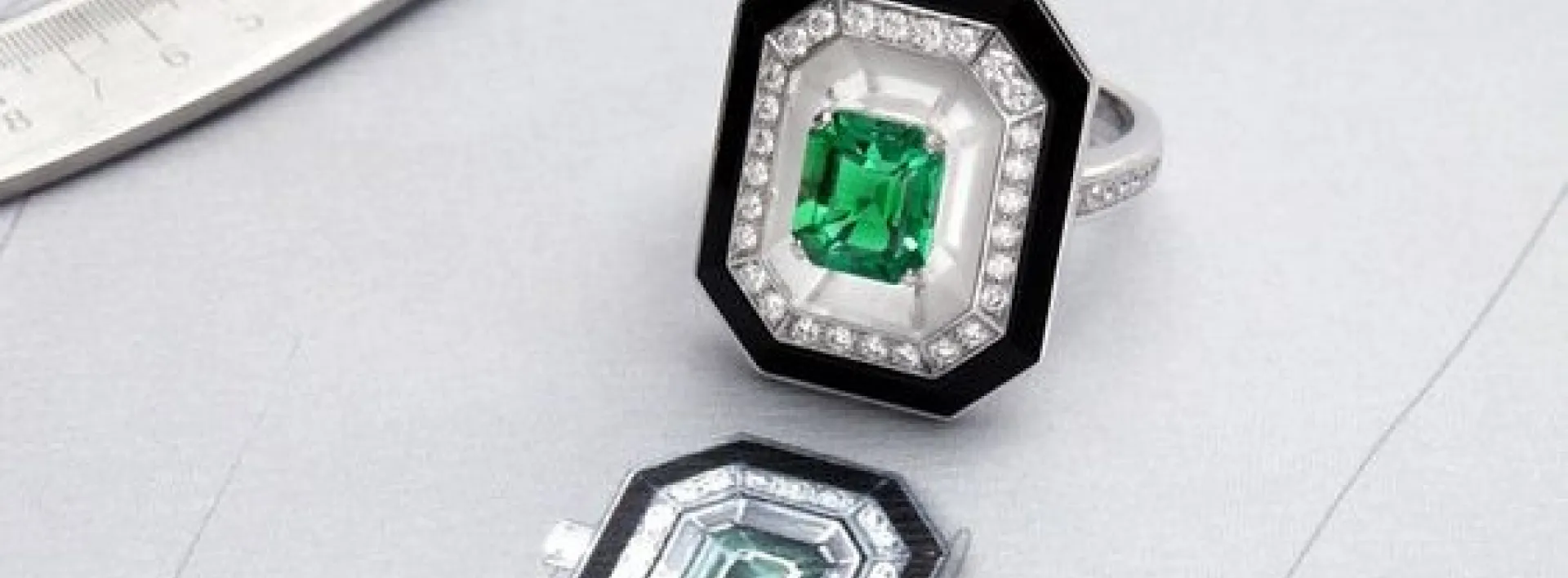
Geometry, symmetry, strong contrasts and streamlined forms reflected the influence of architecture, modernity and new artistic movements. Diamonds were frequently combined with onyx, emeralds, sapphires and rubies to create graphic compositions.
This period established visual codes that continue to influence contemporary high jewelry.
Case study: Patented secrets of famous luxury jewelry houses
Innovation in jewelry does not only concern aesthetics. Some of the industry's most recognisable creations depend on highly sophisticated technical developments.
One of the most famous examples is Van Cleef & Arpels' Mystery Set.
Developed during the 1930s, the technique allows gemstones to be set in such a way that the metal holding them appears to disappear from view. The stones are individually prepared and positioned on an intricate underlying structure, producing an uninterrupted surface of colour.
The Maison's archives trace the development of the technique through several patents and improvements during the decade; the name “Mystery Set” was registered in 1936.
This technical innovation became an important signature of Van Cleef & Arpels and illustrates a fundamental characteristic of high jewelry: behind an apparently effortless aesthetic often lies extraordinary technical complexity.
Turn your passion for heritage into a career with Sup de Luxe
The history of jewelry demonstrates that the sector is built on much more than precious materials. Heritage, artistic movements, technical innovation, brand identity and craftsmanship all contribute to the value and desirability of a Maison.
Today, professionals working with luxury jewelry houses must understand these historical codes while also responding to new expectations in communication, retail, customer experience and international luxury management.
At Sup de Luxe, students explore the heritage and contemporary challenges of luxury through programmes developed in close connection with the industry.
Discover Sup de Luxe programmes and turn your interest in luxury heritage into professional expertise.
Understand the luxury sector
MBA Luxury Brand Marketing & International Management
MSc Global Luxury Brand Management
FAQ
When does the history of jewelry begin?
Jewelry dates back to ancient civilisations, where ornaments were already used for decoration, social distinction, religious symbolism and protection.
When did modern luxury jewelry houses emerge?
Although some European jewelry dynasties are much older, the nineteenth century was particularly important in establishing the modern model of the luxury jewelry house, combining workshops, signature styles, prestigious boutiques and international clientele.
How did Art Nouveau influence jewelry?
Art Nouveau introduced flowing lines, natural motifs, colour and experimentation with materials, placing artistic expression at the centre of jewelry design.
How did Art Deco transform high jewelry?
Art Deco brought geometric forms, symmetry and strong colour contrasts to jewelry, creating a visual language that remains influential today.
What is Van Cleef & Arpels' Mystery Set?
It is a highly complex setting technique designed to conceal the visible metal holding gemstones in place, creating the impression of a continuous surface of stones. The Maison developed and patented key elements of the technique during the 1930s.