

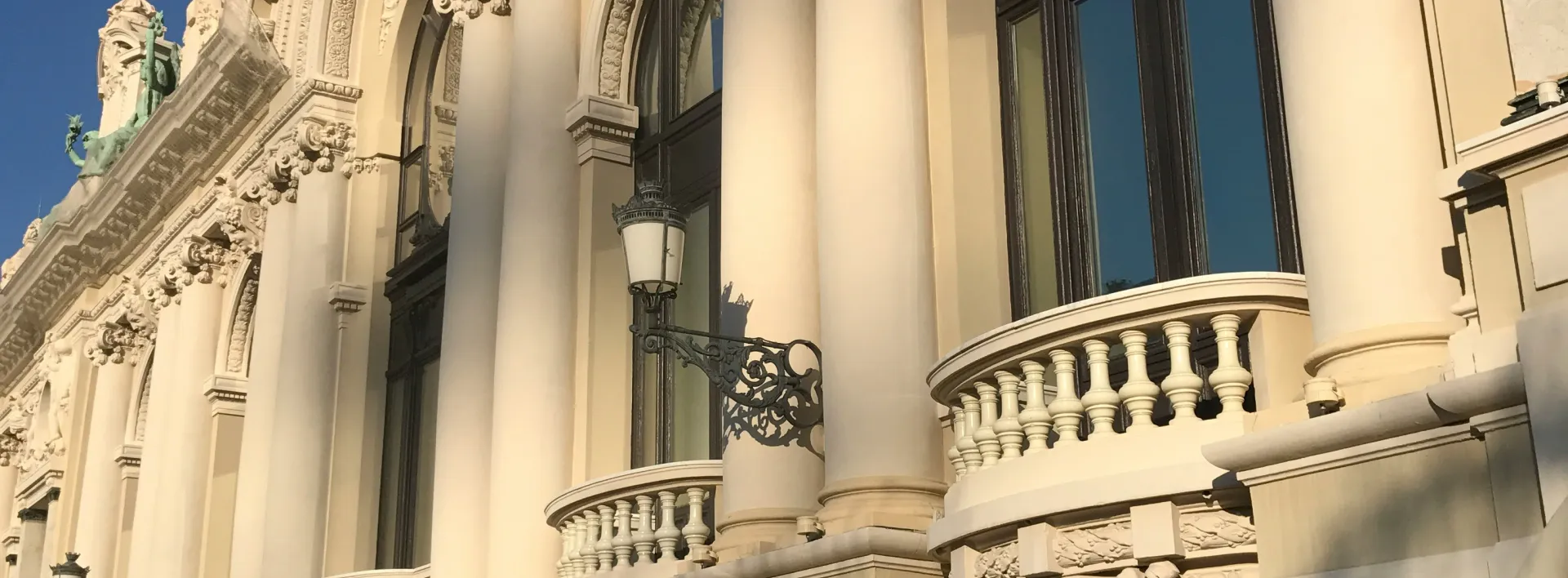
The 16 official haute couture houses in 2026
Haute couture represents the highest level of fashion craftsmanship. Although the term is known worldwide, haute couture is not simply another name for luxury fashion: in France, it refers to a highly selective system governed by specific rules and overseen by the Fédération de la Haute Couture et de la Mode (FHCM).
Every season, Paris Haute Couture Week brings together historic maisons, international corresponding members and invited designers, showcasing exceptional craftsmanship and creative experimentation. But what is haute couture exactly, how does it differ from ready-to-wear, and which houses shape couture today?
What is haute couture? Definition and legal criteria
The term haute couture, literally “high sewing” or “high dressmaking”, refers to exceptional garments created through highly specialised craftsmanship.
Unlike industrially produced fashion, haute couture is based on made-to-measure creations, extensive handwork and the expertise of specialised ateliers. A single piece may require hundreds or even thousands of hours of work, bringing together dressmakers, embroiderers, feather workers, pleaters and other highly skilled craftspeople.
In France, the haute couture designation is protected and reserved for houses recognised within the official couture framework. This exclusivity explains why the number of recognised maisons remains extremely limited compared with the wider luxury fashion industry.
The role of the Fédération de la Haute Couture et de la Mode
The Fédération de la Haute Couture et de la Mode (FHCM) plays a central role in the French fashion ecosystem. It represents its members, supports the development and international influence of French fashion and coordinates both Paris Fashion Week and Haute Couture Week.
Through its Haute Couture Committee, the Fédération structures the official couture calendar and distinguishes between different categories of participating houses.
This institutional framework contributes to preserving haute couture as both a French cultural heritage and a continuously evolving creative discipline.
Haute couture vs ready-to-wear: what really changes
The main difference between haute couture and ready-to-wear lies in the way garments are designed and produced.
Ready-to-wear collections are created in standard sizes and produced in series, even at the highest end of the luxury market. Haute couture, by contrast, is centred on exceptional craftsmanship, highly personalised creations and extensive handwork.
The difference also lies in scale. Ready-to-wear is an important commercial activity for fashion houses, while couture is produced for a very limited international clientele.
Yet couture's influence extends far beyond the clients who purchase it. The silhouettes, techniques, materials and creative ideas presented during Haute Couture Week often contribute to a maison's broader image and influence future collections across fashion, accessories, beauty and communication.
Permanent members, corresponding members and guest houses
Not every brand appearing during Haute Couture Week has the same status.
The FHCM distinguishes several categories. Haute Couture Members are houses officially recognised within the French couture system. Corresponding Members are established outside France but participate in the official couture ecosystem. Guest Houses are invited to present their work on the official calendar, often bringing new creative perspectives to the week.
Understanding these categories is important: appearing on the Haute Couture Week calendar does not necessarily mean that a house holds the same institutional status as a permanent Haute Couture Member.
The haute couture houses shaping the industry in 2026
The couture landscape continues to evolve. Historic maisons coexist with independent designers and international houses, while creative-director changes regularly bring new interpretations of established heritage.
Note: the status and participation of maisons within the official FHCM Haute Couture Week calendar may evolve from one season to another.
| House | Founded | Creative direction in 2026 | Signature |
|---|---|---|---|
| Chanel | 1910 | Matthieu Blazy | Tweed, refined construction and Parisian elegance |
| Christian Dior | 1946 | Jonathan Anderson | Architectural silhouettes and couture heritage |
| Schiaparelli | 1927 | Daniel Roseberry | Surrealism, art and sculptural couture |
| Givenchy | 1952 | Sarah Burton | Refined silhouettes and modern elegance |
| Jean Paul Gaultier | 1976 | Guest-designer model | Reinvention, craftsmanship and creative freedom |
| Maison Margiela | 1988 | Glenn Martens | Deconstruction and experimental craftsmanship |
| Valentino | 1960 | Alessandro Michele | Romanticism, colour and elaborate craftsmanship |
| Giambattista Valli | 2005 | Giambattista Valli | Volume, tulle and dramatic eveningwear |
| Alexis Mabille | 2005 | Alexis Mabille | Contemporary elegance and femininity |
| Franck Sorbier | 1991 | Franck Sorbier | Artistic and theatrical couture |
| Stéphane Rolland | 2007 | Stéphane Rolland | Architectural volumes and sculptural silhouettes |
| Julien Fournié | 2009 | Julien Fournié | Technical experimentation and refined construction |
| Maurizio Galante | 1986 | Maurizio Galante | Experimental forms and textile innovation |
| Adeline André | 1981 | Adeline André | Minimalism and precise construction |
| Bouchra Jarrar | 2010 | Bouchra Jarrar | Tailoring and understated sophistication |
| Alexandre Vauthier | 2009 | Alexandre Vauthier | Glamour, sharp silhouettes and eveningwear |
Chanel
Founded by Gabrielle Chanel in 1910, Chanel has played a defining role in the history of French fashion. From the introduction of a new vision of feminine elegance to its iconic tweed, the Maison has continuously combined heritage with reinvention.
In 2026, Chanel's couture continues under the creative direction of Matthieu Blazy, opening a new chapter in one of fashion's most influential houses.
Christian Dior
Founded in 1946, Christian Dior transformed post-war fashion with the New Look and established a distinctive vision based on silhouette, construction and femininity.
Today, Jonathan Anderson leads the creative direction of the Maison, interpreting Dior's extensive archive through a contemporary perspective. The FHCM lists Anderson as Dior's artistic director in 2026.
Schiaparelli
Founded by Elsa Schiaparelli in 1927, the Maison is inseparable from surrealism and the dialogue between art and fashion.
Under Daniel Roseberry, Schiaparelli has returned to the centre of contemporary couture through spectacular silhouettes, sculptural details and a highly recognisable visual language.
Givenchy
Hubert de Givenchy founded his Maison in 1952, developing a style associated with elegance, purity of line and enduring sophistication.
Today, its heritage continues to evolve through a contemporary vision that connects the Maison's history with the expectations of modern luxury clients.
Jean Paul Gaultier
Jean Paul Gaultier has long challenged the conventions of fashion through humour, cultural references and technical virtuosity.
Since the founder stepped away from the runway, the Maison has adopted an unusual model for haute couture: inviting different designers to reinterpret the Gaultier codes from one collection to another.
Maison Margiela
Maison Margiela has built its identity around deconstruction, experimentation and the transformation of garments and materials.
With Glenn Martens at its creative helm, the Maison continues to explore couture as a space for experimentation and exceptional craftsmanship.
Valentino
Valentino has developed a couture language associated with romanticism, colour and elaborate craftsmanship.
Its couture heritage demonstrates how an international house can contribute to the Paris couture ecosystem while maintaining a distinctive creative identity.
Giambattista Valli
Giambattista Valli is known for spectacular volumes, layers of tulle and highly feminine silhouettes.
His couture collections frequently explore the relationship between movement, proportion and fantasy, particularly through dramatic eveningwear.
Alexis Mabille
Alexis Mabille combines classical couture techniques with a contemporary approach to elegance.
His work often focuses on clean construction, fluidity and a modern interpretation of French sophistication.
Franck Sorbier
Franck Sorbier approaches couture as an artistic discipline.
His collections combine traditional savoir-faire with theatrical presentation, transforming the runway into a space for storytelling and experimentation.
Stéphane Rolland
Stéphane Rolland is particularly recognised for architectural silhouettes, dramatic draping and sculptural volumes.
His work illustrates the close relationship between couture, architecture and the study of movement.
Julien Fournié
Founded in 2009, Julien Fournié explores couture through technical innovation, materials and precise construction.
The Maison combines traditional craftsmanship with experimentation, demonstrating how couture can evolve alongside new technologies.
Maurizio Galante
Maurizio Galante is known for an experimental and sculptural approach to clothing.
His creations often blur the boundaries between fashion, design and artistic research.
Adeline André
Adeline André has developed a discreet and highly precise approach to couture.
Her work is characterised by clean lines, technical construction and a minimalist interpretation of elegance.
Bouchra Jarrar
Bouchra Jarrar is recognised for precise tailoring and an understated approach to luxury.
Her work focuses on cut, proportion and sophisticated construction rather than excess.
Alexandre Vauthier
Alexandre Vauthier's aesthetic combines glamour, sensuality and sharply constructed silhouettes.
His work reflects the continuing role of eveningwear and red-carpet dressing within contemporary couture culture.
Heritage and innovation: how couture influences the wider industry
Haute couture preserves techniques that have been passed down through generations, but it is far from being frozen in the past.
Couture ateliers continuously experiment with materials, construction, embroidery and new technologies. This makes couture a creative laboratory where designers can test ideas without the same production constraints as large-scale ready-to-wear.
The influence can then extend across a maison: into ready-to-wear, accessories, visual merchandising, campaigns and even the way the brand presents itself to clients.
Why couture rarely makes money and still drives brand value
The direct commercial market for couture is extremely small. Creating unique garments through hundreds of hours of highly skilled labour makes the model expensive and difficult to scale.
Its strategic value, however, extends beyond direct sales.
Couture showcases the highest expression of a maison's creativity and savoir-faire. Runway shows generate international visibility, reinforce desirability and provide powerful storytelling that can influence the perception of the entire brand.
In this sense, couture is not simply a product category. It can function as an image, innovation and brand-equity driver across the wider luxury ecosystem.
The crafts behind a couture collection
A couture collection is never the work of a designer alone.
Behind every silhouette is a network of highly specialised professionals: pattern makers, dressmakers, embroiderers, feather workers, pleaters, flower makers, shoemakers and many other artisans.
Their technical expertise allows an initial sketch to become a garment whose construction may involve extraordinary complexity.
Ateliers, petites mains and the métiers d'art that support the houses
Inside couture ateliers, the skilled craftspeople traditionally known as the petites mains are essential to bringing collections to life.
Around them exists an entire ecosystem of métiers d'art. Embroidery, featherwork, pleating, jewellery, textile flowers and other specialist crafts can require skills developed over decades.
Preserving these professions is therefore crucial not only for individual maisons, but for the continuity of the couture ecosystem itself.
Building a career around haute couture
Working around haute couture does not necessarily mean becoming a designer or craftsperson.
Couture houses also rely on professionals in marketing, communication, brand management, retail, client relations, events, merchandising and international business.
Understanding the cultural and creative codes of couture can therefore be valuable for a wide range of careers within the luxury industry.
Marketing, retail and communication roles inside a couture house
Marketing teams translate a maison's creative identity into coherent brand strategies. Communication professionals transform collections into stories and images capable of reaching an international audience. Retail and client-relations teams build highly personalised relationships with clients, while event and PR teams manage the exceptional visibility surrounding couture presentations.
These roles require both business skills and a strong understanding of luxury culture, heritage, craftsmanship and customer experience.
Which training matches which level of study?
For students beginning their higher education, Sup de Luxe's Bachelor in Luxury provides a broad introduction to luxury management, marketing, communication and business while progressively building professional experience.
At postgraduate level, the MBA Luxury Brand Marketing & International Management develops a more strategic understanding of luxury brands and their business challenges, while the MSc Luxury Fashion Management offers a route for students wishing to specialise more specifically in fashion and luxury.
Ready to build your career in luxury fashion?
From heritage and craftsmanship to marketing, retail and international brand strategy, haute couture brings together many of the skills that define the wider luxury industry.
Discover Sup de Luxe's programmes and find the course that best matches your academic background and career ambitions. Explore Sup de Luxe programmes
FAQ: haute couture houses
What is haute couture?
Haute couture is the highest level of fashion craftsmanship and refers to exceptional garments created through specialised atelier work, extensive hand-finishing and highly personalised construction.
What is the difference between haute couture and ready-to-wear?
Haute couture focuses on exceptional craftsmanship, individual construction and a very limited clientele. Ready-to-wear is produced in standardised sizes and larger quantities.
Who decides which houses are part of haute couture?
The French couture ecosystem is overseen by the Fédération de la Haute Couture et de la Mode through its Haute Couture Committee and official calendar.
Are all brands showing during Haute Couture Week official Haute Couture Members?
No. The official calendar includes Haute Couture Members, Corresponding Members and Guest Houses. Their status is identified by the FHCM.
When is Haute Couture Week in Paris?
Haute Couture Week takes place twice a year in Paris, presenting Spring/Summer and Autumn/Winter collections. In 2026, the Autumn/Winter 2026–2027 edition ran from 6 to 9 July.
